The one thing that always makes me nervous ahead of hosting is seating. Food is something I can plan, and décor is something I can make do with at the last moment.
But finding myself short of four or five seats when my guests arrive within an hour, with a full bar in one hand and some level of dread in the other, is a particular type of panic.
I now know how to prepare for it rather than find out on the day.
It’s possible for a living room to fit more people than it appears to at first inspection. You just need to know where all the spare seating is hiding, and this tends to be in places you would not expect on an average day.
If you are also trying to make a small space work better, you may like these 10 Small-Space Ideas to Make Your Home Feel Cozier This Fall. The post has more simple ways to make better use of the space you already have.
1. Look beyond the chairs you already have
A strong ottoman, bench, stool, or other sturdy piece of furniture designed for sitting can provide extra seating when needed.
Before purchasing or borrowing anything, take a tour around your home and look for pieces that could safely be moved into the living room for the day.
You may have more usable seating than you realize.
2. Borrow dining chairs from a room that won’t need them
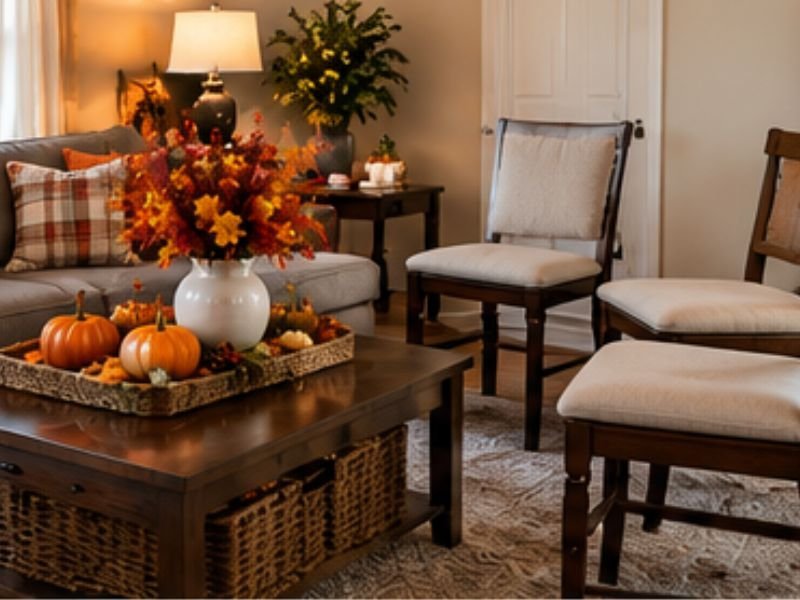
If you have a desk chair, vanity stool, dining chair, or another piece that is normally used for seating in your bedroom, office, or another room, and it will not be needed during the party, move it into the living room.
It will add extra seating without any real effort on your part.
This is also a good example of why you do not always need to buy more furniture for a small home. Sometimes, you simply need to move what you already have.
3. Use ottomans as flexible overflow seating
An ottoman can be both a footrest and an extra seat, which makes it very useful when you are hosting.
Just move the ottoman from where you normally keep it, and it becomes an extra place for someone to sit.
When the day ends, you can simply move it back.
If your home has limited storage, choosing furniture that can serve more than one purpose can make a big difference. My guide on How to Organize Your Home for Maximum Space and Beauty has more ideas for using furniture and space more efficiently.
4. Stack floor cushions for a casual seating zone
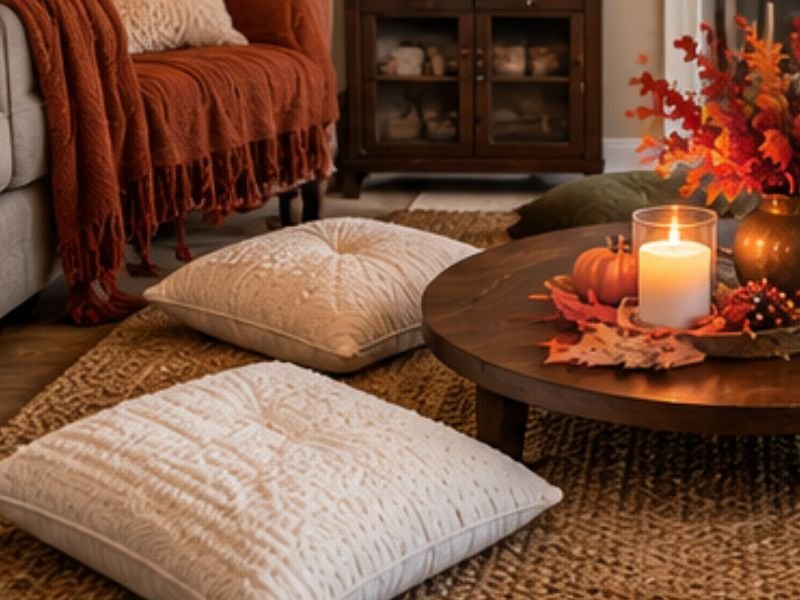
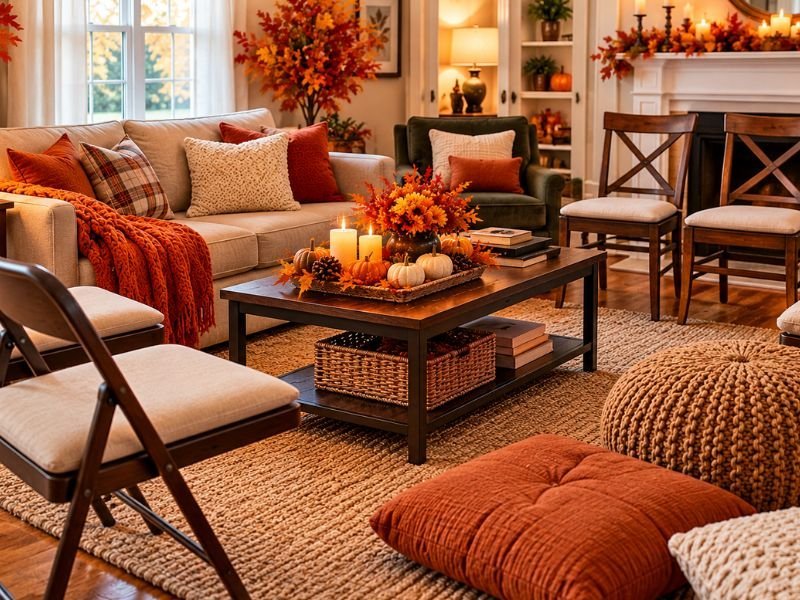
Having a collection of floor cushions around a small table makes for a comfortable place to sit, particularly for children, who will generally not mind sitting closer to the ground.
It can also work for adults during a casual part of the gathering.
The cushions can be stacked or stored away when they are not needed, so they do not have to take up permanent space in your living room.
5. Rent or borrow folding chairs for just the day
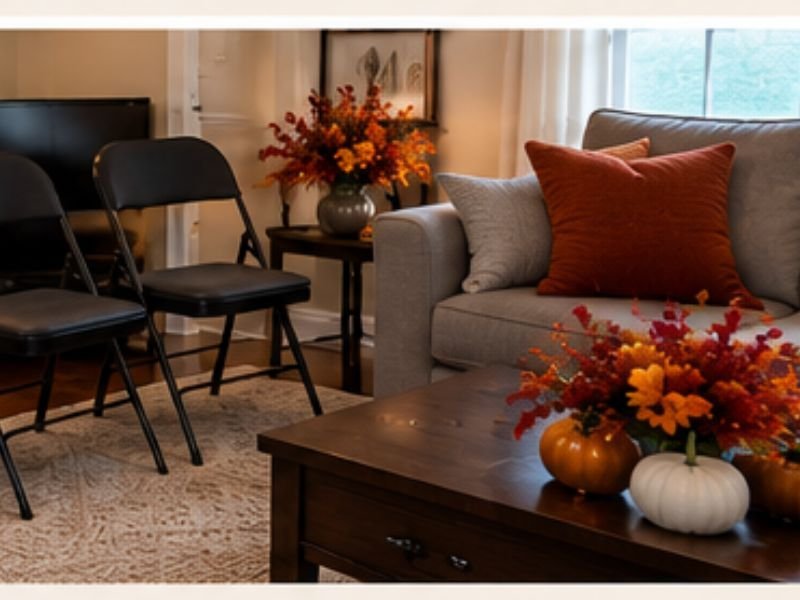
If people close to you entertain regularly, it is very likely that one of them has folding chairs somewhere in storage that could be put into use.
It is also a good idea to ask around before purchasing.
Borrowing a few chairs means you have extra seating when you need it without having more things cluttering your closet for the rest of the year.
6. Use a bench instead of individual chairs where you can
A bench can hold more people in a smaller amount of space compared with individual chairs.
It can also be pushed against a wall and pulled out only when it is needed.
This is an important consideration when you do not have much storage space during the rest of the year.
7. Rotate seating through the day instead of assigning it
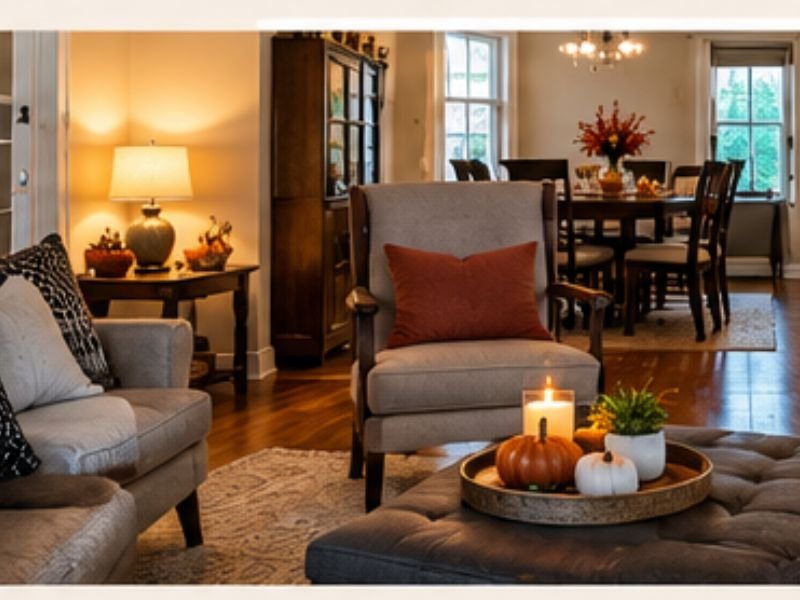
Everybody does not have to be provided with a fixed seat throughout the entire gathering.
People naturally move around during the day. Some will sit, some will stand, and others may move into another room to talk.
Allowing people to move around can reduce the number of dedicated seats you need at any one time.
8. Create a stair-step seating arrangement if your layout allows
If there is a suitable platform, step, or raised niche in your home that is safe and appropriate for sitting, it can sometimes provide informal seating that would not normally be counted in your furniture arrangement.
However, make sure the area is stable, safe, and actually intended to support someone’s weight before using it as seating.
The goal is to find overlooked space without creating a safety problem.
9. Use the bedroom as a backup seating space
An adjacent bedroom, if your guests are comfortable using it, can serve as a backup seating space for quieter conversations.
This can be especially useful for people who need a few minutes away from the noise and activity.
You do not have to make the entire room part of the party. Even a comfortable chair or a small seating area can give someone a peaceful place to sit.
10. Measure before assuming a space won’t work
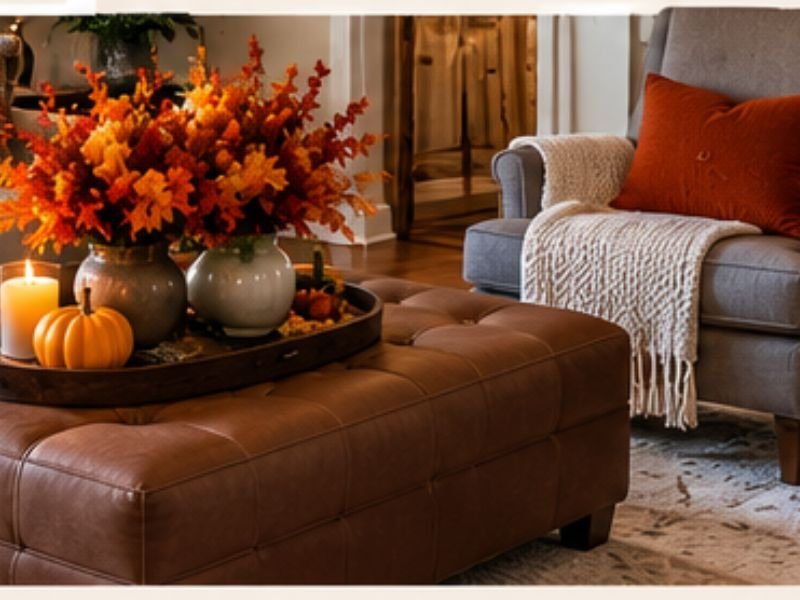
A space that seems too small for a regular chair might be suitable for a small stool or folding chair.
It pays to measure first rather than immediately deciding that something will not work.
In small spaces, there is often some extra potential that you cannot see just by looking.
This is one of the reasons I like to rearrange and measure before buying anything new. A small change in layout can sometimes solve a problem that seemed much bigger.
If you are working on organizing your whole home, 20 Small Home Organization Ideas to Try This Fall also has practical ideas for making better use of small spaces.
Frequently Asked Questions
What’s the fastest way to find extra seating for a small living room?
Walk around your home and look for sturdy furniture that is designed for sitting, such as ottomans, stools, benches, dining chairs, and folding chairs. You may be able to solve much of the seating problem before borrowing or buying anything.
Is it worth buying extra chairs just for one hosting day a year?
Mostly not. If you only need extra seating for Thanksgiving, borrowing or renting folding chairs can be a better option. You can also move seating from other rooms that will not be needed during the gathering.
How many seats do I actually need if guests won’t all sit at once?
Usually fewer than the total number of guests. If people are comfortable moving between sitting and standing, or spending time in different rooms, you may not need a dedicated seat for everyone at the same time.
Are floor cushions a good seating solution for adults, not just kids?
Yes. Floor cushions can work well for adults during short periods and in informal settings, especially when there is a low table nearby. They are also easy to stack and store after the gathering.
Should I measure small or awkward spaces before assuming they can’t fit seating?
Yes. Corners and small areas that seem too tight may be able to accommodate a small stool or folding chair. Measure the area first before deciding that it will not work.
Conclusion
None of this means that you need to buy an entire set of furniture.
It simply means looking at what you already have and what is available to use before the party starts.
First, look around the house for seating that can safely be moved into the living room. Then consider folding chairs, ottomans, benches, and floor cushions.
You may find that you already have more seating options than you thought.
The goal is not to make your small living room look like a large one. It is simply to make the space work better for the people you are hosting.