Bedroom measurements are something many people overlook when building or buying a house.
A space may look appropriate on a floor plan, but in reality, it can feel cramped even though it was designed to look spacious.
Nonetheless, not every bedroom needs to be huge to be comfortable.
So, what size can be considered a comfortable bedroom?
There is no universal answer because comfort depends on how the room will be used, the size of the furniture, storage needs, ceiling height, natural light, and how easily you can move around the room.
However, a bedroom of around 90–100 square feet (8.4–9.3 square meters) can be considered a compact bedroom, while 100–120 square feet (9.3–11.1 square meters) can give one person more comfortable space.
Bedrooms for couples or people who need additional furniture may need to be larger.
It is important to have enough space for more than just a bed. Ideally, you should be able to sleep, dress, move around, and store your belongings comfortably.
If you want a broader look at bedroom dimensions and how much space you may need, you can also read my guide on How Much Space Do You Really Need in a Bedroom? A Practical Size Guide.
What Is Considered the Minimum Bedroom Size?
There are two different meanings of minimum bedroom size.
One refers to the smallest room that can fit bedroom furniture. The other refers to the smallest room that can provide comfortable living space.
These two things do not always mean the same thing.
Technically, you can fit a bed and a small cabinet into a very small room. But if the space is so limited that you cannot walk around the furniture comfortably, the room may not feel comfortable.
Around 90 square feet (8.4 square meters) can work for a small bedroom in many furniture layouts.
For example, a room measuring approximately 9 feet by 10 feet provides 90 square feet of floor space.
This can accommodate a single bed or a smaller double bed, depending on the furniture arrangement.
However, storage and walking space need to be carefully planned.
A 10-by-10-foot room gives you 100 square feet and provides a little more flexibility.
For a couple, a bedroom of 120 square feet or more may be more comfortable because a larger bed takes up more floor space.
Bedroom Size Guide by Room Type
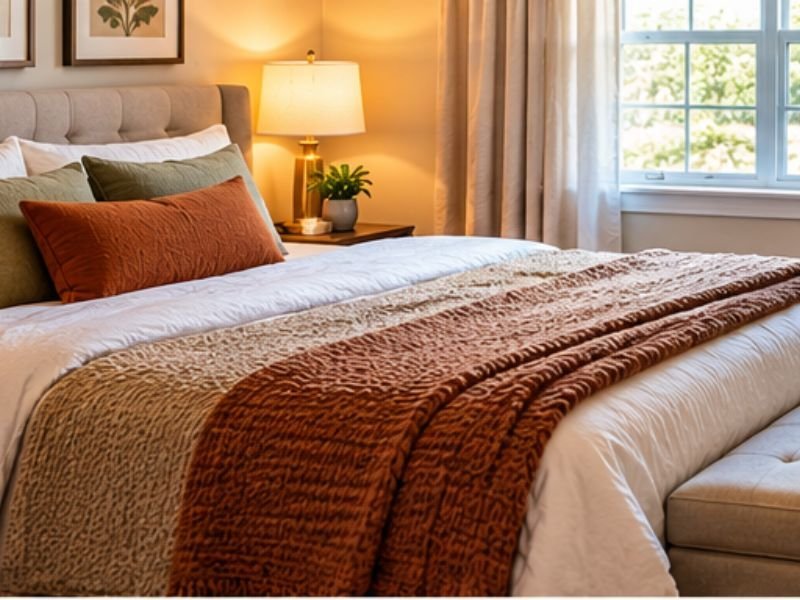
Different bedrooms have different space requirements.
A primary bedroom, guest room, child’s bedroom, and single bedroom do not necessarily need to have the same dimensions.
Small Bedroom: 70–90 Square Feet
A bedroom between 70 and 90 square feet can work as a child’s bedroom or an extremely small single bedroom.
For example, an 8-by-10-foot bedroom has 80 square feet of floor space.
It may be possible to fit a single bed, small wardrobe, and compact desk if the furniture is chosen carefully.
However, oversized furniture can quickly make a small bedroom feel crowded.
Built-in storage, under-bed storage, and furniture that serves more than one purpose can help make better use of the room.
If you are working with a very small bedroom, you may also find my post on 20 DIY Small Bedroom Ideas to Make Your Room Look Bigger useful. It covers simple ways to make a small bedroom feel more open and comfortable.
Comfortable Single Bedroom: 90–120 Square Feet
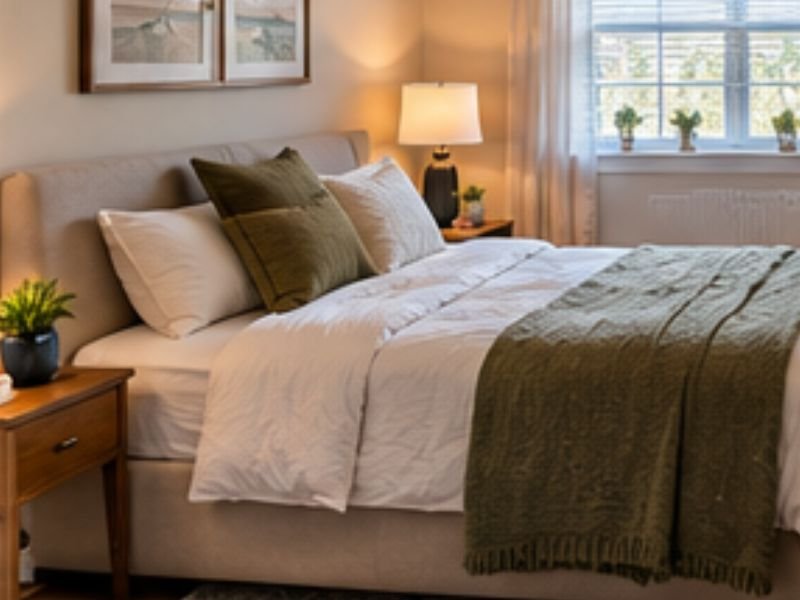
A bedroom between 90 and 120 square feet can be a flexible space for one adult.
It can accommodate a single bed and, depending on the layout, possibly a double bed.
You may also have enough room for a wardrobe, bedside table, or small desk.
For many homeowners looking for a compact bedroom, this can be a practical target.
Comfortable Double Bedroom: 100–140 Square Feet
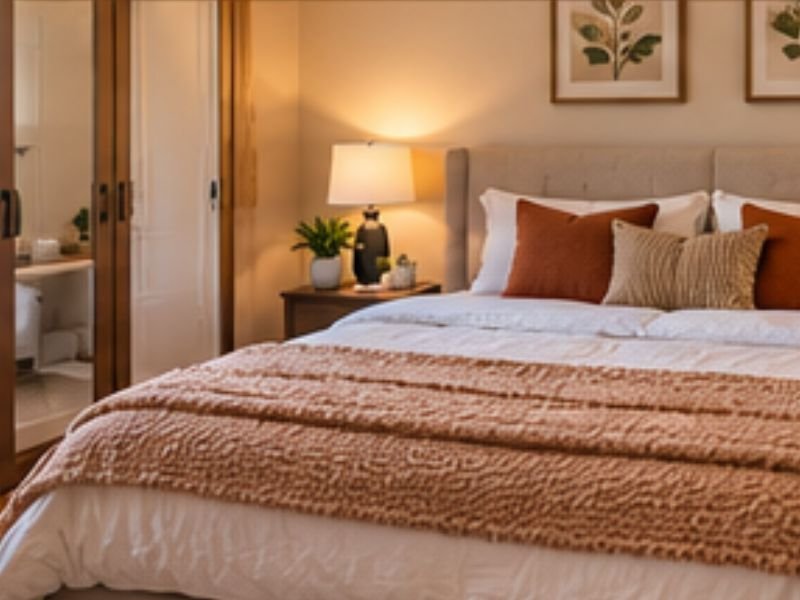
A double bedroom needs enough space for two people and their belongings.
While 100 square feet may be enough in some layouts, the shape of the room is just as important as the total square footage.
A square or well-proportioned room may be easier to furnish than a narrow room with the same amount of floor space.
For a couple, a bedroom measuring around 120–140 square feet can provide more room for the bed, storage, and movement.
Primary Bedroom: 140–200+ Square Feet
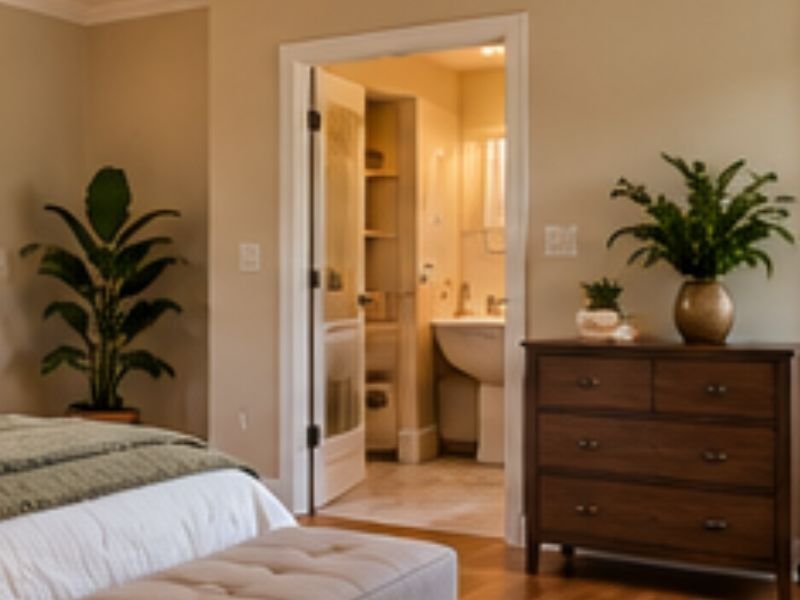
The primary bedroom is usually the largest bedroom in a home, and there is a good reason for that.
A room of around 140–200 square feet or more can accommodate a larger bed, nightstands, wardrobes, and other furniture more comfortably.
The required space may increase if the primary bedroom includes a bathroom, dressing area, or additional storage.
However, a primary bedroom does not have to be huge to be comfortable. Good planning and furniture placement can make a smaller room work well.
Why Bedroom Dimensions Matter More Than Square Footage
Square footage is important when assessing the comfort of a bedroom, but it is not the only thing that matters.
The shape and dimensions of the room can have a significant effect.
For example, compare a 10-by-10-foot bedroom with a room that is approximately 6 by 16.7 feet.
Both have roughly 100 square feet of floor space.
However, the first room may be easier to furnish because the shape gives you more practical options for placing a bed and wardrobe.
The narrow room may make it harder to arrange furniture without creating awkward walking paths.
That is why you should look at the actual dimensions of a bedroom, not just the total square footage.
There needs to be enough space to move comfortably around the furniture.
How Much Space Do You Need Around a Bed?
The bed is normally the largest piece of furniture in the bedroom.
That is why it should be one of the first things you consider when planning the room.
You need enough space to get in and out of bed, open wardrobe doors, and use drawers without constantly bumping into furniture.
A useful planning target is around 2 to 2.5 feet (60–75 cm) of walking space around the bed where possible.
In a small bedroom, this space may be reduced. However, too little walking space can make everyday activities uncomfortable.
The size of the bed also matters.
A larger bed can take up a significant amount of the floor area and make a small bedroom feel much more crowded.
For this reason, choose the bed size based not only on what you want, but also on what the room can comfortably accommodate.
Don’t Forget About Storage
A bedroom is not just a sleeping area.
Most people also need space for clothes, shoes, personal items, and linens.
A room that looks spacious before the furniture arrives can feel completely different once a tall cabinet and large wardrobe are added.
When designing a small bedroom, think about how you can make the most of the available space.
Tall cabinets and wardrobes can be useful because they provide plenty of storage while taking up less floor space.
Under-bed storage can also help you use space that would otherwise go unused.
For more general ideas about making better use of your home, see How to Organize Your Home for Maximum Space and Beauty.
What Should You Consider Before Choosing a Bedroom Size?
Before deciding how large a bedroom should be, think about how you will actually use it.
Consider the following:
Who will use the bedroom?
A child, single adult, couple, or occasional guest will have different needs.
What size bed will be used?
The larger the bed, the more floor space you need around it.
How much storage is necessary?
Clothes, shoes, linens, and personal items can take up more space than you expect.
Will there be a desk?
If you plan to work or study in the bedroom, you will need additional space for a desk and chair.
Where will the doors and windows go?
Their positions can affect where you can place your bed, wardrobe, and other furniture.
Will there be enough space to walk?
A room may have enough square footage but still feel uncomfortable if the walking paths are too narrow.
Will the room have another purpose?
For example, a bedroom may also serve as a home office, reading area, or dressing space.
If you are dealing with a small bedroom and want to make better use of the available space, my post on How to Maximize Space in a Small Bedroom Renovation is also relevant. Journey With Ogochukwu Animba
So, What Is the Minimum Bedroom Size for a Comfortable Home?
For a comfortable home, around 90 square feet (8.4 square meters) can be considered a practical minimum for a compact one-person bedroom.
Between 100 and 120 square feet gives you more flexibility.
Couples and primary bedrooms will usually need more space, often around 120–200 square feet, depending on the bed size, furniture, storage, and how the room will be used.
However, there is no single number that guarantees comfort.
A well-designed 90-square-foot bedroom may feel much better than a poorly arranged 130-square-foot bedroom.
The bedroom size, furniture arrangement, storage, natural light, room shape, and walking space all affect how comfortable the room feels.
FAQ
What is the minimum bedroom size for one person?
Around 90 square feet can work as a compact bedroom for one person, although 100–120 square feet provides more flexibility.
Is a 10-by-10 bedroom big enough?
Yes. A 10-by-10 bedroom provides 100 square feet and can work well as a compact bedroom when the furniture is arranged carefully.
Is 90 square feet too small for a bedroom?
Not necessarily. A 90-square-foot bedroom can work, especially for one person, but furniture size, storage, and walking space become more important.
What is a comfortable bedroom size for a couple?
Around 120–140 square feet can provide a more comfortable layout for a couple, although the ideal size depends on the bed and furniture.
Does bedroom shape matter?
Yes. Two rooms with the same square footage can feel very different. A well-proportioned room is often easier to furnish than a long, narrow room.
How much space should you leave around a bed?
Around 2 to 2.5 feet (60–75 cm) of walking space around the bed is a useful planning target where possible.
Does storage affect bedroom size?
Yes. A bedroom needs space not only for the bed but also for wardrobes, clothes, shoes, linens, and other belongings.
Conclusion
The best bedroom size is not simply a number.
It is a room that is large enough for the people using it, the furniture they need, the storage they require, and the activities they want to do there.
Before choosing a bedroom size, think beyond the bed.
Think about where the wardrobe will go, how you will walk around the room, whether you need a desk, and how much storage you need.
A smaller bedroom can still be comfortable when it is planned properly.
The goal is not simply to create a room with enough square feet. It is to create a bedroom that is genuinely livable.