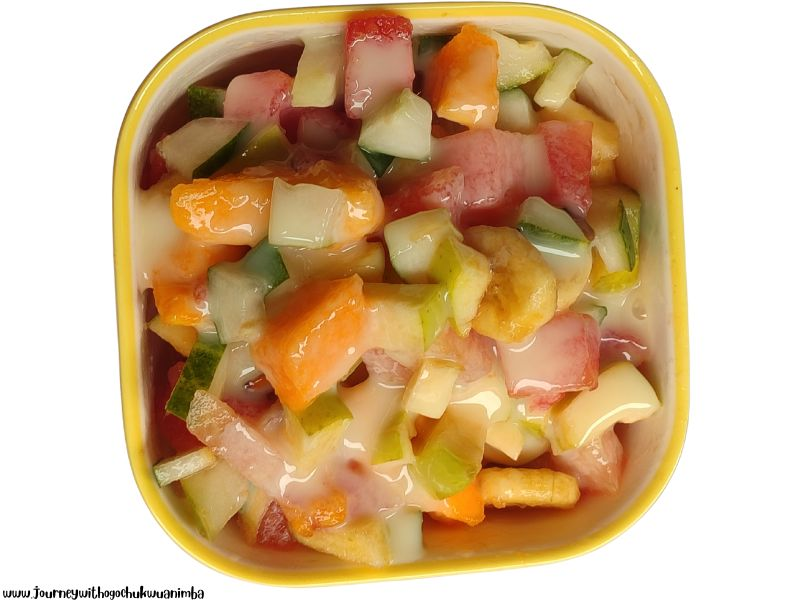
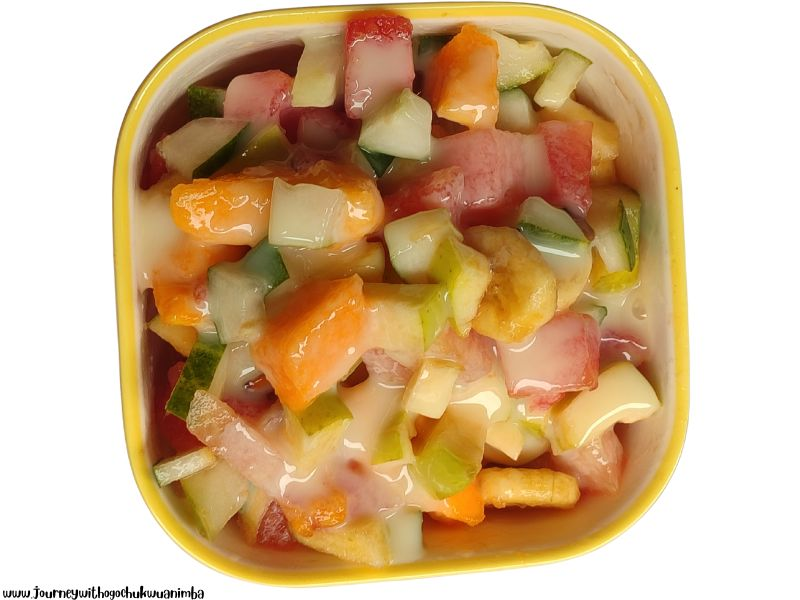
Fruit salad is one of those little things that feels like a treat and a healthy choice at the same time. In Nigeria we are lucky, fruit sellers line the streets, markets overflow with bright, juicy produce and many fruits taste like sunshine in every bite. If you want a quick, delicious plate of fruit that is both refreshing and good for you, this simple Nigerian fruit salad is for you.
Why I Love Fruit Salad
Fresh fruits are natural gifts. They are sweet, colorful and full of vitamins. In my house, fruit is not just a snack, it is a habit. A plate of mixed fruit lifts the mood, fills you with energy and makes the body happy. Watermelon, pineapple, oranges, pawpaw (papaya), grapes and bananas are some of my favorites. If you find mangoes or apples, add them too. Each fruit brings a new texture and taste to the bowl.
What to Buy at the Market
Living in Onitsha, I see fruit sellers everywhere. If you live in any Nigerian city or town, you will find most of these fruits. Try to choose fruits that are ripe but not overripe. Here is a simple shopping list:
-
Watermelon (big and juicy)
-
Pineapple (sweet and fragrant)
-
Pawpaw / papaya (soft and orange)
-
Oranges (for juice)
-
Grapes (seedless if possible)
-
Banana (ripe but firm)
Optional: mango, apple, soursop when available
How Often Should You Eat It?
You can enjoy a plate of fruit salad often; I suggest at least once a week. Fruits support good digestion, give your body vitamins, and boost mood. Eating a variety of fruits gives you different nutrients. But like all good things, balance is key. If you want, have fruit more often as a healthy snack instead of processed sweets.
Why Fresh Fruits Matter
Our grandparents ate mostly fresh food from farms and lived with less processed food. Today, many foods are processed and lack nutrients. Fruits are simple and full of vitamins, fiber and water. They help your body cells work well. When you choose fruits instead of sugary snacks, you give your body real fuel.
Preparing Your Fruit Salad — Easy Steps
You do not need special skills. A clean knife, a cutting board and a bowl are enough. Follow these easy steps:
Step 1: Wash the fruits
Wash everything under clean running water. This removes dust and small debris. Wash grapes and any fruits with skins.
Step 2: Peel where needed
Peel the pawpaw, pineapple, and oranges. Use a sharp knife and be careful. For pineapples, cut off the top and base, then slice away the skin. For oranges, peel and remove white pith if you prefer.
Step 3: Chop to bite-size
Cut watermelon, pineapple, pawpaw, mango, and apple into small, bite-size cubes. Slice bananas just before serving so they don’t go brown quickly.
Step 4: Juice the oranges (and grapes if you like)
Squeeze fresh orange juice into a small cup. Some people like to mash grapes lightly or squeeze a little grape juice for more flavor. Pour the juice over the fruit mix to add a mild dressing.
Step 5: Mix and chill
Combine all fruits in a large bowl. Pour the orange or grape juice over the top and gently toss. Chill in the fridge for 10–20 minutes before serving. Serve with a spoon.
Tips for Better Flavor
-
Use ripe fruits: Ripe fruits are sweeter and juicier. Pineapple and pawpaw should smell sweet at the stem.
-
Keep bananas separate: Bananas turn soft and brown after some time. Add them only when you are ready to serve.
-
Try a citrus twist: A little lemon or lime squeezed over the top brightens the taste.
-
Add mint leaves: Fresh mint adds a lovely aroma and makes the bowl look fresh.
-
Make it creamy (optional): Some people add a spoon of yogurt or a little sweetened condensed milk. If you choose this, mix lightly and serve immediately.
Different Ways to Serve
-
Alone: Serve a plate as a simple, healthy snack.
-
As dessert: Top with a spoon of plain yogurt or a drizzle of honey.
-
With cereal: Pour fruit over cold cereal for a fresh breakfast bowl.
-
Party bowl: Make a large bowl for guests — double the recipe and add fresh coconut pieces for a tropical touch.
Storing Leftovers
If you have leftovers, keep them in a covered container in the refrigerator. Eat within 24 hours for best taste and texture. Fruits like apples and bananas brown faster, so eat them first or keep them separate.
Health Benefits in Simple Words
-
Hydration: Fruits like watermelon have lots of water to keep you hydrated.
-
Vitamins: Oranges and pawpaw give vitamin C, which helps the body.
-
Fiber: Fruits have fiber to help digestion and keep you full.
-
Natural sugar: Fruit sugar is better than processed sweets because it comes with fiber and nutrients.
Children and Fruit
Children love colors and sweet tastes. Nigerian fruit salad is a great way to feed kids healthy snacks. Cut fruits into fun shapes or use small skewers to make fruit kebabs. This makes eating fruit playful and easy for small hands.
Local Flavors and Seasonal Choices
Nigeria has many fruit seasons. When watermelon is in season, you will find bright, cheap watermelons. Pineapple season brings very sweet fruit. Soursop is a special treat when it appears, but it is often scarce. Use what is fresh and cheap in your area .
A Few Simple Safety Notes
-
Use clean utensils and clean hands when preparing food.
-
If selling fruit at markets, keep them covered from dust and flies.
-
If you are feeding young children, remove seeds and check for allergies.
Why This Is a Good Habit
Eating fresh Nigerian fruit salad often helps create a healthy routine. It replaces sugary snacks and offers real nutrition. Serving fruit to your family teaches children good eating habits from a young age. Over time, this small change brings big benefits.
Short Variations to Try
-
Two-fruit combo: Mix pineapple and pawpaw for a soft, sweet bowl.
-
Mango focus: When mangoes are ripe, make them the star with a squeeze of lime.
-
Tropical mix: Add coconut flakes and shredded coconut for a beach feel.
-
Simple juice mix: If you prefer liquids, blend a few fruits into a smoothie with water or milk.
How to pick the best fruit — quick guide
Picking good fruit makes a big difference. Here are quick checks:
-
Watermelon: Tap the skin — a hollow sound often means ripe. Look for a yellow spot where it rested on the ground.
-
Pineapple: Smell the base; it should be sweet. A few loose top leaves can mean ripeness.
-
Pawpaw (papaya): Press gently; it should give slightly but not be soft.
-
Mango: Smell near the stem for a sweet scent and feel for slight softness.
-
Oranges: They should feel heavy for their size.
-
Grapes: Pick firm, plump grapes with smooth skin.
More about health — simple facts
When you eat mixed Nigerian fruit salad, you get many vitamins and minerals. Vitamin C from oranges and pawpaw helps your body fight sickness. Vitamin A in mango and pawpaw helps the eyes. Potassium in bananas and watermelon is good for the heart. Fiber helps digestion and keeps you full. Natural sugars in fruit are paired with fiber, which is better than eating sweets alone. For children and older adults, fruit is a gentle, natural food that supports health.
Party tips and pretty bowls
For guests, use a clear bowl to show the colors. Add mint leaves or thin lime slices for a fresh touch. Serve fruit in a hollowed pineapple for a tropical look. Fruit skewers on wooden sticks are fun for parties. Sprinkle a few roasted groundnuts or coconut flakes for crunch. For an extra zing, press a small piece of ginger into the orange juice before pouring over the fruit.
Quick FAQs
Q: Add sugar? No need — ripe fruit is sweet. If you must, try a small drizzle of honey.
Q: Freeze it? Some fruits freeze well for smoothies. Bananas and apples may change texture.
Q: For diabetics? Yes in small portions; check with a doctor.
Storage and safety
Keep Nigerian fruit salad cool in a covered container in the fridge; eat in 24 hours. For long trips, pack fruit in a cooler with ice packs. Use clean hands and utensils when preparing fruit to avoid germs and keep everyone safe.
Conclusion
Make a fresh fruit bowl at least once a week for a month. Notice small changes like fewer junk snacks, more energy, and better thirst control. Fruit is a simple, joyful step toward a healthier life.
you may also like: